THND Staff | 10:20 AM, August 12, 2026
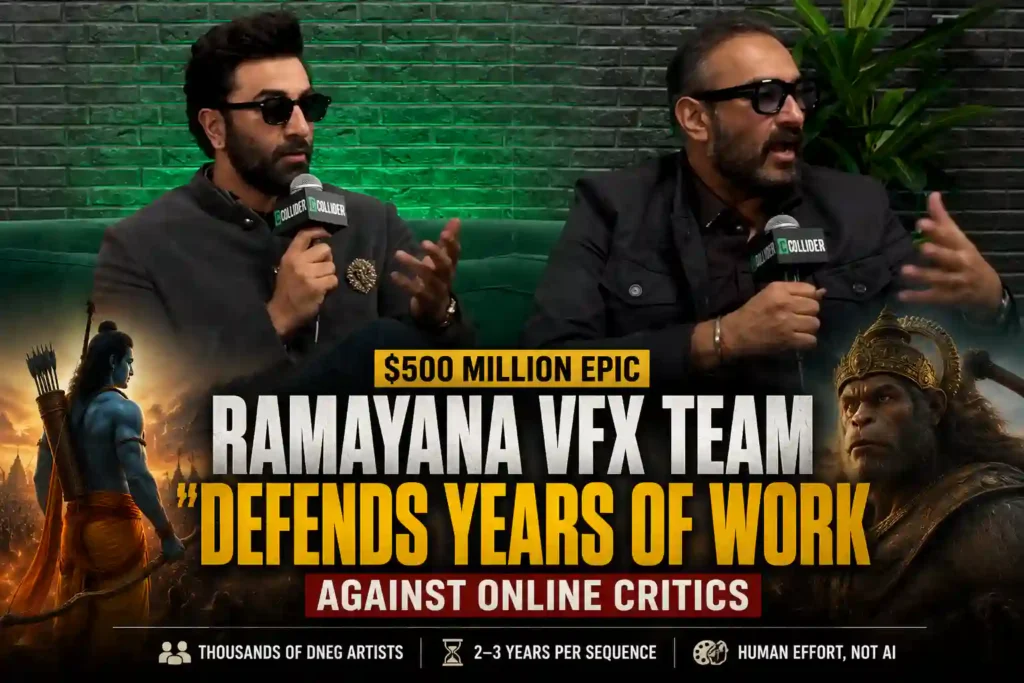
The Ramayana VFX controversy has intensified after the team behind the highly anticipated $500 million film series responded to online criticism of the trailer’s visual effects.
Following the trailer’s release, some viewers described portions of the visuals as “AI-generated” or cartoonish. The criticism quickly spread across social media, prompting members of the filmmaking team to defend the enormous amount of work involved in bringing the epic to the screen.
The films, starring Ranbir Kapoor as Rama, are among the most ambitious Indian productions ever attempted. The scale of the project has generated enormous expectations, particularly because audiences are expecting a visual interpretation of the Ramayana that can compete with major international fantasy productions.
Ramayana VFX Team Highlights Human Effort
The Ramayana VFX team has stressed that the visuals are the result of years of work by highly skilled artists rather than something that can simply be generated by artificial intelligence.
The production reportedly involves thousands of artists at DNEG, with some sequences taking two to three years to develop. Such work can involve character creation, digital environments, simulations, lighting, compositing, animation and multiple rounds of revisions.
The response from the filmmakers was directed particularly at what they viewed as “armchair experts” confidently evaluating complex visual-effects work without understanding how such sequences are actually produced.
That argument has received support from fans who believe the discussion has overlooked the enormous human effort involved in large-scale visual effects.
Why Ramayana VFX Has Become Such a Big Debate
The Ramayana VFX discussion illustrates a growing problem for major films: audiences now see unfinished-looking visual effects, AI-generated imagery and highly polished CGI on social media every day.
As a result, viewers have become increasingly confident in judging whether an image looks convincing, even though professional VFX production is considerably more complicated.
At the same time, the filmmakers cannot expect audiences to evaluate the process instead of the final product.
The Final Film Will Decide
That is ultimately where the debate becomes interesting.
A production can employ thousands of artists and spend years creating a sequence, but audiences will still judge whether Rama, the environments, creatures and large-scale battles look believable on screen.
Criticism of a visual therefore does not necessarily mean criticism of the artists who created it.
Both positions can exist simultaneously: the work behind the scene can deserve enormous respect, while the finished image can still be judged on its artistic and technical effectiveness.
The Ramayana VFX debate is therefore unlikely to be settled by social-media arguments.
The real test will come when audiences see the completed films in theatres.
With Ranbir Kapoor playing Rama and music involving A.R. Rahman and Hans Zimmer, expectations are already exceptionally high.
For a project of this scale, the filmmakers will need to deliver not merely technically impressive visuals, but imagery that makes audiences believe in the world of the Ramayana.
Until then, trailer screenshots and short clips can provide only a limited picture of what the final production will look like.
The controversy may ultimately prove useful for the film as well. By explaining the years of labour behind the project, the team has given audiences a glimpse into the enormous production effort involved.
Whether that changes public opinion remains to be seen.
For now, the Ramayana VFX debate continues online, with supporters defending the artists and critics waiting to see whether the finished film lives up to its extraordinary expectations.